

Q1 2026 Gold Demand: What Investors Need to Know
- Central banks bought a net 244 tonnes of gold in Q1 2026 — a 3% year-over-year increase despite gold trading at multi-record highs.
- Total gold demand hit 1,231 tonnes in Q1 2026, generating a record $193 billion in value — a 74% jump from the same period last year.
- Bar and coin demand reached 474 tonnes, the second-highest quarter ever recorded, driven largely by Asian retail investors.
- 95% of central banks surveyed by the World Gold Council expect global gold reserves to grow over the next 12 months — a signal private investors should not overlook.
- Jewelry volumes dropped 23% on record prices, yet consumer spending on gold jewelry still rose 31% — revealing just how much conviction buyers have at these levels.
Gold just quietly broke every record that matters — not in price alone, but in the sheer volume of money and sovereign institutions piling in.
The World Gold Council’s Q1 2026 Gold Demand Trends report confirms what many hard asset investors have suspected: demand for physical gold is structurally different now than it was five years ago. Merchant Gold Group is among the voices in the precious metals space that have been tracking this shift closely, offering investors a direct way to participate in physical gold ownership as institutional buying continues to set the pace.
Central Banks Just Bought 244 Tonnes of Gold — Here’s Why That Matters to You
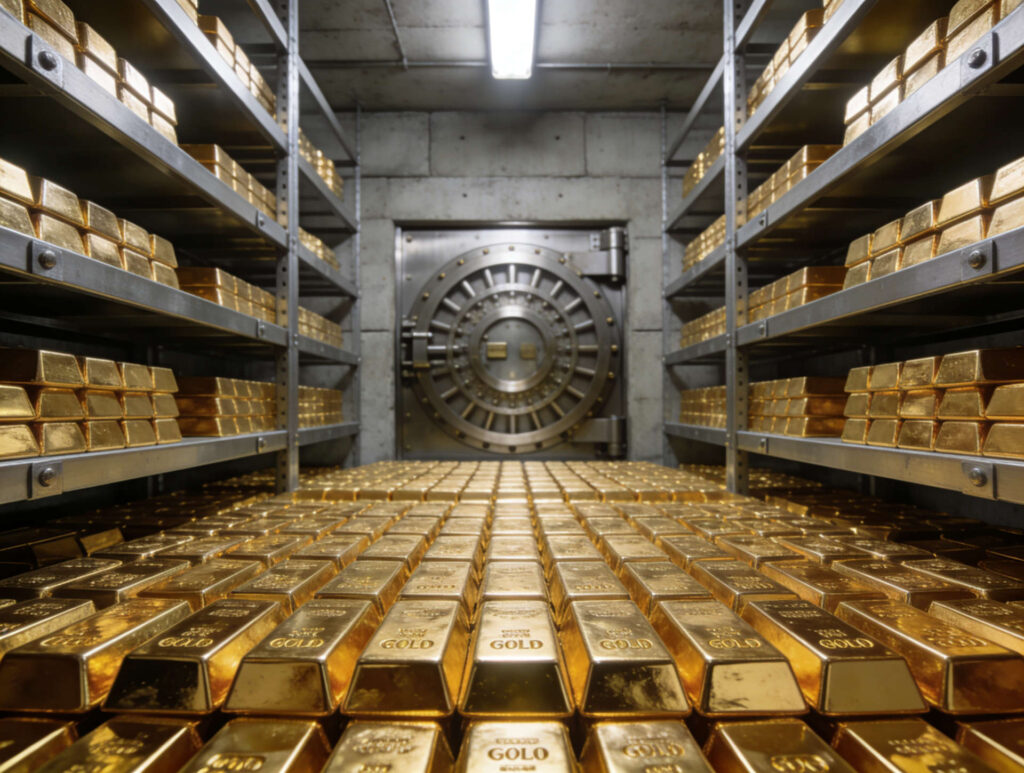
Central banks added a net 244 tonnes of gold to their reserves in Q1 2026. That is not a dramatic leap from Q1 2025’s 237 tonnes, but the consistency is what makes it remarkable. This marks more than three consecutive years of sovereign gold buying above levels the market had never seen before 2022. These are not speculative traders reacting to headlines — these are reserve managers with multi-decade mandates making deliberate, long-term allocation decisions.
The World Gold Council projects total central bank purchases for 2026 will land between 700 and 900 tonnes, consistent with the elevated buying pace that began after Russia’s reserves were frozen. J.P. Morgan’s internal model points to roughly 800 tonnes for the full year. Even at the low end of that range, annual sovereign demand would still be nearly double the pre-2022 average of 400 to 500 tonnes.
What 244 Tonnes Actually Looks Like in Dollar Terms
At Q1 2026 gold prices, 244 tonnes translates to roughly $21 billion in sovereign gold purchases in a single quarter. That is one government sector alone, buying at a pace that would have been considered extraordinary just four years ago — and they did it while gold was trading at all-time highs. This is not bargain hunting. This is conviction buying at any price. For more insights, read about the central banks’ gold purchases.
Three Years of Consecutive Buying: The Pattern Private Investors Should Not Ignore
Patterns in sovereign reserve management move slowly, but when they shift, they tend to hold for decades. The current central bank buying cycle started accelerating in 2022 and has not broken stride since. Three consecutive years above 800 tonnes annually is not noise — it is a structural reallocation away from dollar-denominated assets and toward hard, unencumbered reserves. Private investors who recognize this pattern early are positioned to benefit from the structural price floor it creates.
Why the 2022 Freezing of Russian Reserves Changed Everything
The single most important catalyst behind the current gold demand supercycle is one that rarely gets discussed plainly: in 2022, approximately $300 billion in Russian foreign exchange reserves held in Western financial institutions were frozen overnight. Every central bank in the world — including those aligned with the West — took note. If sovereign reserves denominated in foreign currencies can be immobilized by geopolitical decision, then only assets held physically and domestically offer true reserve security.
Gold is the only reserve asset that carries no counterparty risk, no issuer, and no freeze mechanism. That realization has permanently changed how reserve managers think about allocation. The World Gold Council’s own survey data reinforces this: 95% of central banks surveyed expect global gold reserves to increase over the next 12 months — not as a hedge, but as a core holding.
- No counterparty risk: Physical gold held domestically cannot be frozen, seized, or defaulted on by a third party.
- Currency independence: Gold is priced globally but tied to no single nation’s monetary policy decisions.
- Geopolitical neutrality: In a fragmenting global order, gold sits outside any one bloc’s financial architecture.
- Proven store of value: Central banks have held gold through every monetary system transition in modern history.
- Liquidity at scale: Gold markets are among the deepest and most liquid in the world, making large-position entry and exit viable for sovereigns.
Q1 2026 Gold Demand by the Numbers
Beyond the central bank headline, the Q1 2026 data tells a broader story about how different types of gold buyers are responding to record prices. The overall picture is one of remarkable resilience — volumes held steady even as price sensitivity would normally have dampened demand across every category.
Total Demand Reached 1,231 Tonnes — A Record $193 Billion in Value
Total Q1 2026 gold demand, including OTC transactions, came in at 1,231 tonnes — a modest 2% increase year-over-year in volume terms. But volume alone dramatically understates what happened. Because gold’s price rose sharply over the same period, the total value of quarterly demand jumped 74% to a record $193 billion. No prior quarter in the history of gold demand tracking has generated that level of dollar-denominated demand.
- Total demand (incl. OTC): 1,231 tonnes — up 2% year-over-year
- Total demand value: $193 billion — a 74% year-over-year increase and a new record
- Central bank net buying: 243.7 tonnes — up 3% from Q1 2025
- Bar and coin demand: 474 tonnes — second-highest quarter ever recorded
- Jewellery volume: Down 23% year-over-year on price pressure
- Jewellery consumer spending: Up 31% year-over-year in value terms
These numbers tell a bifurcated story. Volume buyers — particularly jewellery consumers — pulled back in response to high prices. But value and conviction buyers — central banks, bar and coin investors, and OTC participants — stepped up. The market is being driven increasingly by buyers who are not price-sensitive in the traditional sense.
Bar and Coin Demand Hit 474 Tonnes, the Second-Highest Quarter on Record
Retail physical gold demand in the form of bars and coins reached 474 tonnes in Q1 2026, the second-highest quarterly figure ever recorded. This category captures private individuals buying physical gold directly — not through ETFs or paper instruments, but through tangible, vaulted, or hand-held metal. The fact that this number is approaching record territory while prices are at all-time highs tells you something important: the buyers in this market are not waiting for a dip.
Gold-Backed ETF Inflows Continued but Slowed Sharply From Q1 2025
Gold-backed ETFs continued to attract net inflows in Q1 2026, but the pace was noticeably slower than the same period in 2025. This deceleration likely reflects profit-taking and portfolio rebalancing from investors who entered during the prior year’s rally, rather than any meaningful loss of conviction. Institutional and retail ETF holders tend to be more price-responsive than physical buyers, and at multi-record highs, some rotation out of paper gold into other assets is a normal part of the cycle.
Jewellery Volumes Fell 23% but Consumer Spending Rose 31%
Jewellery is the one category where record gold prices created clear demand destruction by volume — down 23% year-over-year. But the dollar figure tells a different story. Consumer spending on gold jewellery actually rose 31% over the same period, meaning buyers paid significantly more for less metal and kept buying anyway. This is a consumer who is not walking away from gold — they are simply adjusting gram weight while maintaining their commitment to the asset.
Why Asian Retail Investors Are Leading the Gold Rush
While Western investors debated whether gold had topped out, Asian retail buyers answered that question with their wallets — and they bought more than almost any quarter on record.
Which Markets Drove the Bar and Coin Surge
China and India remained the dominant engines of physical retail demand in Q1 2026. Chinese buyers in particular have been channeling savings into gold bars and coins at an accelerating pace, driven by a combination of yuan depreciation pressure, a struggling domestic property market, and limited alternative investment options that offer comparable safety. Indian demand held firm despite record rupee-denominated gold prices, supported by cultural affinity for physical gold and growing awareness of gold as a financial hedge rather than purely a ceremonial purchase.
What Asian Buying Behavior Signals About Global Sentiment
Asian retail investors tend to be highly price-aware — historically, volume demand from this region drops sharply when prices spike. The fact that bar and coin demand reached near-record levels despite all-time high gold prices signals something deeper than opportunistic buying. These markets are treating gold not as a trade, but as a savings vehicle and store of wealth in an environment where traditional financial instruments feel increasingly unreliable.
This behavioral shift matters for how investors globally should think about gold’s demand floor. When price-sensitive buyers stop being deterred by high prices, it means their motivation has changed. They are no longer buying because gold is cheap — they are buying because the alternative of not holding gold feels riskier than paying a record price for it. For more insights, read about central banks’ gold purchases.
That psychology, once entrenched across hundreds of millions of retail savers, creates a remarkably durable demand base. It does not evaporate on a single bad headline or a Federal Reserve rate decision. It compounds quietly, quarter after quarter, in ways that only become visible in retrospect when you look at three or four years of consecutive data. For further insights, explore the Q1 2026 Gold Demand Trends.
| Region | Q1 2026 Bar & Coin Demand | Y/Y Change | Key Driver |
| China | Leading contributor | ↑ Strong growth | Yuan pressure, property market weakness |
| India | Major contributor | ↑ Resilient | Cultural demand, financial hedge adoption |
| Middle East | Significant contributor | ↑ Elevated | Geopolitical uncertainty, oil wealth diversification |
| Western Markets | Moderate contributor | ↓ Softer vs. prior year | ETF rotation, profit-taking at record prices |
Gold Prices Hit Record Highs — Then Pulled Back in March
Gold’s price trajectory in Q1 2026 was not a straight line up. The quarter opened with strong momentum carrying over from late 2025, pushed to successive record highs through January and February, then saw a notable pullback in March that rattled short-term holders but barely registered for long-term demand.
- January 2026: Gold extended its late-2025 rally, breaching successive all-time highs on safe-haven and central bank demand.
- February 2026: Prices continued climbing, supported by persistent geopolitical tension and strong physical buying from Asia.
- March 2026: A sharp pullback triggered by de-escalation signals in the Middle East and short-term profit-taking across commodity markets.
- Quarter average: Despite the March dip, average Q1 prices were dramatically higher year-over-year, contributing to the record $193 billion total demand value.
Pullbacks in bull markets are features, not flaws. The March correction did not change the underlying demand structure — central banks kept buying, Asian retail investors kept buying, and the total quarterly tonnage still came in 2% above the prior year.
For investors watching from the sidelines, corrections like this one historically represent entry windows rather than exit signals, particularly when the structural drivers — geopolitical fragmentation, sovereign debt levels, dollar reserve diversification — remain fully intact.
How the Iran Conflict and Strait of Hormuz Closure Triggered the Decline
The March pullback was closely tied to shifting signals around the Iran conflict and the status of the Strait of Hormuz. Earlier in the quarter, closure fears and military escalation had driven a significant safe-haven premium into gold’s price. When diplomatic channels reopened and partial de-escalation messaging emerged in mid-March, some of that geopolitical risk premium unwound quickly, pulling prices back from their highs.
This is a pattern worth understanding clearly: gold prices often carry a geopolitical risk premium that can deflate rapidly on good news, even when the underlying structural demand remains unchanged. The metal’s safe-haven spike and subsequent correction in Q1 2026 was a textbook example of that dynamic. Long-term holders saw it as noise. Short-term traders felt the pain.
Why Record Prices Did Not Stop Central Banks From Buying
Central bank reserve managers do not operate on the same logic as retail traders. They are not trying to time the market or optimize entry price over a six-month horizon. When a reserve manager allocates to gold, the decision is driven by currency diversification mandates, reserve adequacy frameworks, and multi-decade strategic positioning — none of which are altered by a quarterly price move, even a record one.
The 244-tonne net purchase figure for Q1 2026 — achieved while gold was trading at or near all-time highs — confirms that sovereign buyers are not waiting for a better price. They have a structural reason to own gold that has nothing to do with short-term price dynamics, and that commitment is what makes their demand so significant as a market signal for private investors.
What Sovereign Gold Buying Means for Your Portfolio
When the entities responsible for managing the world’s largest pools of capital make a sustained, multi-year shift toward a single asset class, private investors should pay attention. The sovereign gold buying cycle that began in earnest in 2022 is not a trend — it is a regime change in how the world’s reserve managers think about safety, liquidity, and independence.
The Structural Price Floor Created by 800+ Tonnes of Annual Central Bank Demand
Before 2022, central banks collectively bought between 400 and 500 tonnes of gold per year. That figure has now roughly doubled, with J.P. Morgan modeling approximately 800 tonnes of central bank purchases for full-year 2026. This volume of consistent, price-insensitive sovereign buying creates a structural demand floor under the gold market that did not exist four years ago. Even if investment demand softens, jewelry volumes stay pressured, and ETF inflows slow, central bank buying alone absorbs enough supply to prevent any sustained price collapse. That is a materially different market structure than existed pre-2022, and it changes the risk profile of a gold allocation meaningfully.
How Debt, Currency Risk, and Geopolitical Fragmentation Apply to Private Balance Sheets
- Sovereign debt levels: Global government debt has reached levels that historically correlate with currency debasement and inflation — the same forces that drive central banks toward gold now apply to private savers.
- Dollar reserve dominance declining: As more trade settles outside the dollar system, the case for dollar-only savings erodes for private investors just as it has for reserve managers.
- Counterparty risk in financial instruments: ETFs, futures, and allocated accounts all carry some layer of institutional counterparty exposure that physical gold held directly does not.
- Geopolitical fragmentation: A world dividing into competing economic blocs creates the same diversification imperative for private portfolios that it created for sovereign reserves.
The forces driving central banks into gold are not exclusive to sovereign entities. Rising debt, weakening currency confidence, and geopolitical uncertainty affect private investors at every level. The difference is that central banks recognized the shift in 2022 and acted on it decisively — while many private investors are still weighing the decision.
A private investor holding a meaningful allocation to physical gold is essentially adopting the same logic that 95% of surveyed central banks have already endorsed: that gold reserves will need to grow over the next 12 months because the macro environment demands it. The scale is different. The reasoning is identical.
The practical implication is straightforward. If you are building a portfolio designed to preserve purchasing power across a decade that includes persistent inflation risk, dollar dilution, and geopolitical instability, the Q1 2026 data gives you a clear picture of what the world’s most sophisticated reserve managers are doing with their capital.
Timing a gold allocation perfectly is less important than having one. The structural demand floor created by sovereign buying means the downside in a long-term physical gold position is materially capped compared to almost any other hard asset category. The upside, in a world where reserve diversification away from the dollar continues to accelerate, remains open-ended.
Physical Gold vs. Financial Gold: The Lesson Every Reserve Manager Already Learned
There is a reason central banks buy physical gold — bars, held in domestic vaults — rather than gold ETFs or futures contracts. Physical gold cannot be frozen, cannot default, and does not require a functioning counterparty to retain its value. The 2022 reserve freeze taught every sovereign wealth manager in the world that financial instruments denominated in or dependent on a foreign jurisdiction carry risks that only materialize in the worst possible moments. Private investors who hold physical gold directly are applying the same lesson to their own balance sheets — and Q1 2026’s demand data confirms they are doing it in growing numbers.
The 2026 Gold Demand Outlook Favors Hard Asset Holders
The conditions that drove gold to record highs in Q1 2026 have not resolved — they have deepened. Geopolitical fragmentation, sovereign debt expansion, and persistent inflation risk are not quarterly phenomena. They are decade-long structural forces, and the demand data reflects that reality with unusual clarity.
Investment and Central Bank Demand Supported by Persistent Geopolitical Risk
The World Gold Council’s outlook for 2026 points to continued strength in both investment and central bank demand, underpinned by the same forces that defined Q1. With central bank purchases projected at 700 to 900 tonnes for the full year, sovereign buying alone will absorb a significant portion of annual mine supply. Investment demand — bars, coins, and ETFs combined — is expected to remain elevated as long as real interest rates stay compressed and geopolitical tensions persist across multiple regions simultaneously. That combination of sovereign and private demand pressing against constrained supply is the structural setup that long-term gold investors have been waiting years to see confirmed.
Jewelry Demand Will Stay Pressured, But Consumer Spending Remains Resilient
Volume-based jewelry demand is unlikely to recover meaningfully in the near term while gold trades near all-time highs. Price-sensitive buyers in key markets like China and India will continue adjusting gram weight downward, and manufacturers will work with lighter designs to maintain accessibility. But the 31% rise in jewelry consumer spending in Q1 2026 — despite a 23% drop in volume — tells you that consumer commitment to gold has not broken. Buyers are paying more for less metal and accepting those terms. That level of price inelasticity in a discretionary category is remarkable and suggests the floor under jewelry demand is higher than traditional price-sensitivity models would predict.
The broader 2026 outlook is one where gold’s investment case remains intact across multiple demand vectors simultaneously — something that has rarely been true in previous cycles. Sovereign buying, retail physical demand, and macro investment flows are all pointed in the same direction. The primary wildcard is a rapid, sustained easing of geopolitical tensions globally, which could reduce the safe-haven premium embedded in current prices. However, given the structural nature of the reserve diversification trend, even a material reduction in geopolitical risk would be unlikely to fully reverse the central bank buying cycle that is now three-plus years entrenched.
Q1 2026 Gold Data Confirms What Smart Investors Already Suspected
The Q1 2026 numbers are not a surprise to anyone who has been watching the structural shifts in global reserve management since 2022. What the data does is confirm, with hard figures, that the thesis is intact and accelerating. 244 tonnes of central bank buying. 474 tonnes of bar and coin demand. $193 billion in total quarterly value. These are not speculative projections — they are verified demand figures from the world’s most comprehensive gold market tracking report. The pattern is clear, the drivers are durable, and the direction of travel for serious capital allocation toward hard assets is not ambiguous.
Private investors who look at this data and recognize the same logic their central bank counterparts applied three years ago are not late to the trade. The structural demand floor created by sovereign buying is still being built. The 95% of central banks expecting their gold reserves to grow over the next 12 months are signaling that this cycle has more runway ahead of it than behind it. For investors building portfolios designed to hold value across a decade defined by uncertainty, Q1 2026 just provided the clearest data point, yet that physical gold deserves a permanent seat at the table.
Frequently Asked Questions
Here are direct answers to the most important questions investors are asking about Q1 2026 gold demand and what it means for their portfolios.
How Much Gold Did Central Banks Buy in Q1 2026?
Central banks bought a net 243.7 tonnes of gold in Q1 2026, according to the World Gold Council’s Gold Demand Trends Q1 2026 report. That represents a 3% increase year-over-year from Q1 2025’s 237 tonnes, and continues a pattern of elevated sovereign gold buying that has now run for more than three consecutive years. The World Gold Council projects full-year 2026 central bank purchases will total between 700 and 900 tonnes.
For context, the pre-2022 annual average for central bank gold purchases was 400 to 500 tonnes. The current pace represents a near-doubling of that baseline, driven primarily by reserve diversification away from dollar-denominated assets following the freezing of Russian foreign exchange reserves in 2022.
Why Did Gold Prices Drop in Early 2026 Despite Strong Demand?
Gold prices pulled back in March 2026 following de-escalation signals related to the Iran conflict and partial reopening of diplomatic channels around the Strait of Hormuz. Earlier in the quarter, the threat of Strait closure had injected a significant geopolitical risk premium into gold’s price. When that specific risk appeared to ease, short-term traders and momentum players unwound positions quickly, triggering a correction from the quarter’s highs. Crucially, this price pullback did not materially affect underlying demand — central banks and physical buyers continued purchasing through the decline, and total quarterly volume still came in 2% above Q1 2025.
What Is Driving Bar and Coin Demand to Near-Record Levels?
Bar and coin demand reached 474 tonnes in Q1 2026 — the second highest quarterly figure ever recorded — driven primarily by Asian retail investors, particularly in China and India. Chinese buyers are responding to yuan depreciation pressure and a weakened domestic property market that has left gold as one of the most accessible and credible stores of value available to ordinary savers. Indian demand has held firm despite record rupee-denominated prices, supported by deep cultural affinity for physical gold and growing recognition of gold as a genuine financial hedge.
The critical insight in this demand category is that it reached near-record levels while gold was trading at all-time highs — a dynamic that directly contradicts the traditional assumption that retail physical demand is highly price-sensitive. It signals a behavioral shift where buyers are treating gold not as a bargain to be hunted but as a necessity to be owned, regardless of price level.
Should Private Investors Follow Central Banks Into Physical Gold?
The forces driving central bank gold accumulation — counterparty risk, currency debasement, geopolitical fragmentation, and the search for reserve assets that cannot be frozen or defaulted on — apply equally to private balance sheets. A central bank holding gold in a domestic vault and a private investor holding physical gold through a fully allocated account are responding to the same macro logic at different scales. The 95% of central banks expecting their gold reserves to grow over the next 12 months are the world’s most sophisticated reserve managers, operating with full access to macro research, geopolitical intelligence, and financial modeling. Their collective conviction toward physical gold is a data point private investors should weigh seriously when making allocation decisions.
What Is the Gold Demand Outlook for the Rest of 2026?
The World Gold Council’s outlook for 2026 supports continued strength in total gold demand, with central bank purchases projected at 700 to 900 tonnes for the full year and investment demand expected to remain elevated on persistent geopolitical risk and compressed real interest rates. Jewelry volume will likely stay under pressure while prices remain near record levels, but consumer spending on gold jewelry is expected to hold up in value terms as buyers accept higher prices for lower gram weights.
The primary risk to the bullish demand outlook is a rapid and sustained resolution of geopolitical tensions — particularly around Ukraine, the Middle East, and US-China trade dynamics — that currently support safe-haven and reserve-diversification buying. A meaningful reduction in those tensions could deflate the geopolitical risk premium in gold prices, even if it did not reverse the structural trend of central bank buying. Short of that scenario, the macro setup for gold demand through the remainder of 2026 remains among the most supportive in the metal’s modern trading history.