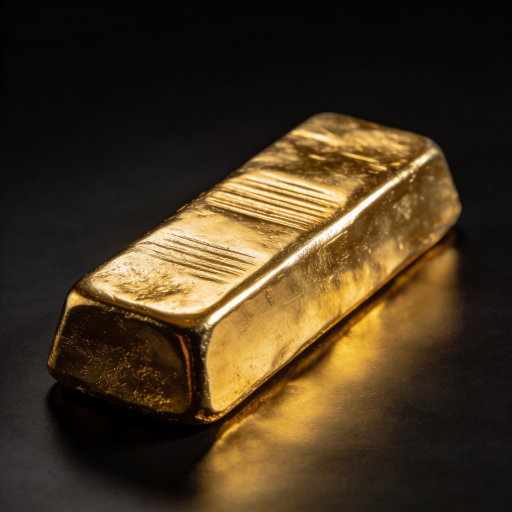

Gold and Silver vs. Platinum and Palladium Investing
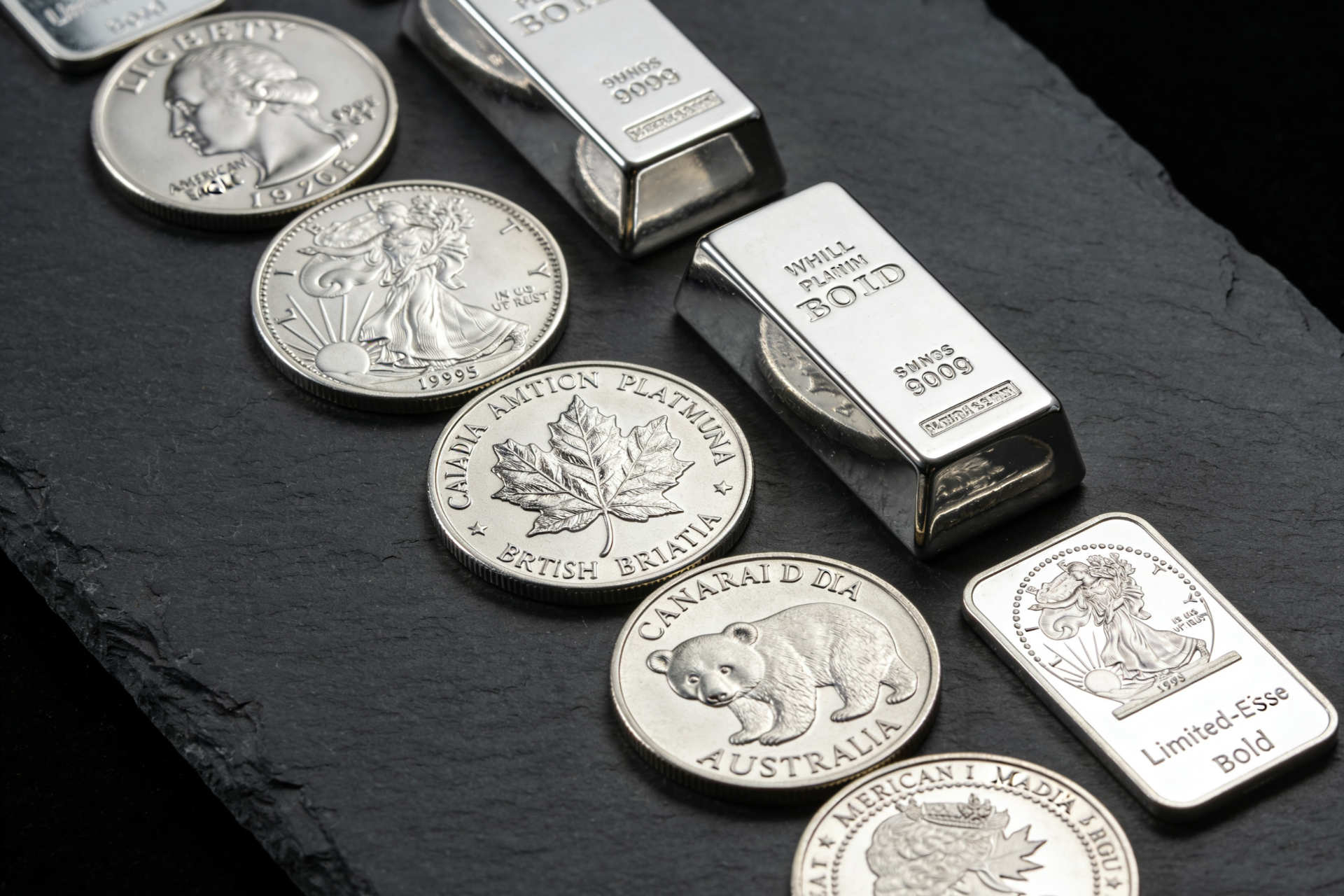
Platinum and Palladium: 0.9995 pure American Platinum Eagle, Canadian Platinum Maple Leaf, British Platinum Britannia, and Australian Platinum Koala, Canadian Palladium Maple Leaf, limited-issue American Palladium Eagles, Platinum and Palladium Bullion Bars.
Key Takeaways
- Gold and silver are monetary metals — central banks hold them, governments have used them as currency, and they have a proven track record as safe havens during economic crises.
- Platinum and palladium are primarily industrial metals — only about 2.5% of their demand comes from investors, making them behave more like commodities than stores of value.
- During recessions, platinum tends to fall — historical data shows it declined in the majority of U.S. recessions since 1970, while gold consistently held or gained value.
- Silver offers a lower cost of entry than gold or platinum, making it an accessible starting point for new precious metals investors.
- Whether platinum ever makes sense in a portfolio depends on factors most investors overlook — keep reading to find out what those are.
When it comes to precious metals investing, not all that glitters plays the same role in your portfolio.
Gold and silver have been stores of value for thousands of years. Platinum and palladium, while rare and genuinely valuable, come from an entirely different world — one driven by automotive manufacturing and industrial chemistry rather than monetary history. Understanding that distinction is the single most important thing you can do before deciding where to put your money.
Gold and Silver Win the Safe Haven Battle — Here’s Why
The term “safe haven” gets thrown around a lot in investing, but it has a specific meaning: an asset that holds or increases in value when financial markets are in turmoil. Gold has earned that title through centuries of real-world performance. Silver follows closely behind. Neither platinum nor palladium can make the same claim.
Platinum Is Rarer Than Gold, But That Doesn’t Make It a Better Investment
Platinum is genuinely scarcer than gold in the Earth’s crust, and it often carries a higher price per ounce in stable market conditions. But rarity alone doesn’t determine investment value. What matters is why people want it. If demand evaporates when the economy slows — and with platinum, it does — rarity won’t save your position. The metal’s price is tied far more to industrial output than to investor sentiment or monetary demand.
Russia's Norilsk Nickel produces around 40 percent of the world’s primary palladium, predominantly as a byproduct of nickel and copper extraction.
Only ~2.5% of Platinum and Palladium Demand Comes From Investors
This number tells you almost everything you need to know. Roughly 97.5% of platinum and palladium demand is industrial — primarily from catalytic converters in vehicles and chemical processing. Investment demand, including both physical bullion and ETF holdings, has actually been declining for several years. Compare that to gold, where investment and central bank demand represent a dominant share of the market, and the contrast becomes stark. When industrial demand drops in a recession, so does the price, with very little investor floor to catch it.
South Africa anchors the global palladium market, digging up 60 to 70 percent of the world's primary platinum from the massive Bushveld Complex.
Because there are almost no alternative mining jurisdictions that can scale to match the output of platinum and palladium, any issue at the Russian and South African sources will shift the global balance.
What Makes Gold and Silver “Monetary Metals”
Gold and silver are not just shiny commodities. They are monetary metals, which means they have historically functioned as money itself — not just as inputs for manufacturing. That distinction changes everything about how they behave in a crisis.
Central Banks Hold Gold — Not Platinum or Palladium
Central banks around the world hold gold as part of their official reserves. No major central bank holds platinum or palladium in a comparable capacity. Russia does hold platinum in its strategic state reserves, but this is an exception rather than a global standard. The fact that central banks choose gold — and have done so for centuries — is a powerful signal about which metal the world’s most sophisticated financial institutions trust as a long-term store of value.
Gold and Silver Have Functioned as Money for Thousands of Years
Gold’s role as money predates modern financial systems by millennia. Civilizations across Asia, Europe, Africa, and the Americas independently arrived at gold and silver as their preferred mediums of exchange. That kind of track record isn’t a coincidence — it reflects real properties: durability, divisibility, portability, and universal recognition. Platinum, by contrast, wasn’t even refined in significant quantities until the 18th century and never entered widespread monetary circulation.
How Gold and Silver Respond to Currency Crises
When paper currencies lose purchasing power through inflation or government mismanagement, gold and silver tend to rise. This is their core function as portfolio protection. Investors fleeing a weakening dollar, euro, or yen instinctively move toward monetary metals — not toward metals whose value depends on how many cars are being manufactured that quarter.
What Platinum and Palladium Actually Are
Platinum (Pt) and palladium (Pd) belong to the Platinum Group Metals, or PGMs. The name platinum comes from the Spanish word platina, meaning “little silver,” reflecting its silvery appearance. Both metals are rare, both are chemically stable, and both have legitimate industrial importance. The question is whether that industrial importance translates into investment value — and the honest answer is: not the way gold and silver do.
Platinum Group Metals (PGMs) and Their Industrial Role
The six Platinum Group Metals are platinum, palladium, rhodium, ruthenium, iridium, and osmium. Of these, platinum and palladium are the most commercially significant. Both are extracted primarily from mines in South Africa and Russia, with South Africa alone accounting for roughly 70% of the global platinum supply. That geographic concentration creates its own risk — supply disruptions from labor strikes or political instability can cause sharp, unpredictable price swings that have nothing to do with macroeconomic conditions or investor demand.
Why Catalytic Converters Drive Most PGM Demand
The single largest use of both platinum and palladium is in catalytic converters — the emissions-control devices fitted to gasoline and diesel engines. Palladium dominates in gasoline engines, while platinum is more commonly used in diesel applications. This means that PGM prices are deeply tied to global auto production, emissions regulations, and the long-term shift toward electric vehicles. As EV adoption accelerates, the structural demand for catalytic converters faces a real long-term headwind — a risk that simply does not exist for gold or silver in the same way.
How Platinum and Palladium Perform During Recessions
This is where the investment case for PGMs gets genuinely difficult to defend. When economies contract, industrial output falls, auto manufacturing slows, and demand for catalytic converter metals drops with it. The price follows. For an investor hoping to protect wealth during exactly those moments of economic stress, that is precisely the wrong behavior.
Platinum Fell in 6 Out of 7 U.S. Recessions Since 1970
The historical record is not kind to platinum as a crisis hedge. Looking at U.S. recessions since 1970, platinum declined in the vast majority of them. Meanwhile, gold — on average — is the only precious metal that has consistently risen during the worst stock market crashes. That pattern is not random. It reflects the fundamental difference between a monetary metal with global safe-haven demand and an industrial metal whose value depends on factory floors staying busy.
Palladium tells a similar story. Its price fell in five of the seven recessions examined, with only modest gains in the exceptions. The one standout was a double-digit rise during the 1974 recession — but a single data point over five decades is a thin foundation for a portfolio strategy. Consider how each metal has historically responded when conditions deteriorate:
Gold: Consistent safe-haven demand, typically holds or rises during recessions and stock market crashes
Silver: Follows gold with some industrial exposure, generally performs better than PGMs during downturns
Platinum: Declined in the majority of U.S. recessions since 1970, closely tied to industrial and auto demand
Palladium: Fell in five of seven recessions, with weak safe-haven credentials and high industrial dependency
The pattern becomes even clearer when you consider why recessions happen. Economic contractions reduce manufacturing, slow auto sales, and cut industrial output — all of which directly suppress PGM demand. There is no offsetting “fear premium” flowing into platinum the way it flows into gold when investors get nervous.
Investment demand for platinum and palladium has also been structurally declining. ETF holdings and physical bullion purchases in these metals have trended downward for years, which means there is less and less of an investor base to absorb selling pressure when industrial demand softens.
Why Industrial Metals Struggle When the Economy Does
The core issue is correlation. Industrial metals tend to move in the same direction as the broader economy — up when growth is strong, down when it contracts. That makes them procyclical assets. What most investors need from a precious metals allocation is something countercyclical — an asset that zigs when markets zag. Gold fills that role. Platinum largely does not.
Gold vs. Silver: Which Monetary Metal Should You Choose
Once you’ve decided to focus on monetary metals — the category where the investment case is actually strong — the next question is whether to buy gold, silver, or both. The honest answer is that they serve slightly different purposes and attract different types of buyers. Neither is universally superior; the right choice depends on your budget, your goals, and how deeply you understand each market.
Both metals share the same fundamental safe-haven credentials. Both have been used as money across cultures and centuries. Both are held outside the banking system when purchased as physical bullion, giving them a unique role as true portfolio insurance. The differences come down to price point, industrial exposure, and liquidity characteristics.
Silver Has a Lower Cost of Entry Than Gold
For investors just starting out, silver’s lower price per ounce makes it significantly more accessible. A single gold coin might cost over $2,000, while a silver coin can be purchased for well under $40. That lower barrier to entry means you can start building a physical metals position without deploying large amounts of capital upfront — and you can dollar-cost average into your position more easily over time.
Silver also has meaningful industrial demand — used in solar panels, electronics, and medical applications — which gives it an additional demand driver that pure monetary metals like gold don’t have. However, that same industrial demand means silver can be more volatile than gold during economic downturns. It is still a far stronger safe-haven asset than platinum, but investors should understand that silver is not purely a monetary metal in the same way gold is.
Gold: Higher cost per ounce, dominant monetary metal, held by central banks globally, least volatile of the precious metals
Silver: Lower cost of entry, dual monetary and industrial demand, higher volatility, stronger upside potential in bull markets
Platinum: Primarily industrial, no central bank demand, price tied to auto manufacturing, weaker safe-haven profile
For savers focused purely on wealth preservation, gold is typically the first choice. For those who want more potential upside and can handle greater price swings, silver offers a compelling addition to a gold position.
Diversifying Across Both Gold and Silver
Many experienced precious metals investors hold both gold and silver simultaneously, using gold as the stable anchor of their metals allocation and silver as the higher-leverage component. The two metals are positively correlated — they tend to move in the same direction — but not perfectly so, meaning silver can outperform significantly during precious metals bull markets while gold provides the floor during downturns.
Some investors let personal conviction and market knowledge guide their allocation between the two. If you follow the silver market closely and understand its industrial dynamics, a larger silver weighting might make sense. If your primary goal is capital preservation with minimal volatility, a gold-heavy allocation is more appropriate. Either way, the strategic logic of combining both metals is stronger than adding platinum or palladium to a gold-only position.
How Your Knowledge of Each Market Should Guide Your Choice
The precious metals market rewards investors who understand what they own and why they own it. If you have deep familiarity with the automotive industry, follow emissions regulations closely, and understand the supply dynamics of South African mining, platinum, or palladium might occasionally present a speculative trading opportunity. But if your goal is long-term wealth preservation — protecting purchasing power against inflation, currency debasement, or financial crisis — that expertise is better directed toward understanding gold and silver fundamentals.
The most common mistake new precious metals investors make is treating all shiny metals as interchangeable. They are not. Gold is money. Silver is money with industrial upside. Platinum and palladium are industrial inputs that happen to be expensive. Keeping that distinction clear will save you from misallocating capital into assets that behave like cyclical commodities when you need a defensive store of value most.
Should You Ever Invest in Platinum or Palladium
There are narrow scenarios where platinum or palladium exposure makes sense — but they are speculative positions, not core portfolio holdings. If you believe global auto production is about to surge, emissions regulations will tighten significantly, or supply from South African mines will be disrupted, a short-to-medium-term position in PGMs could be profitable. Some investors also hold small amounts of platinum purely for diversification across the precious metals complex, acknowledging that prices across gold, silver, and platinum are positively correlated but not perfectly so.
Platinum and palladium should never be a substitute for gold or silver in a wealth preservation strategy. The investment demand base is too thin, the industrial dependency too high, and the recession track record too weak. If you already hold a solid position in gold and silver and are looking for speculative exposure to a different part of the precious metals market, a small PGM allocation can be a calculated risk. For everyone else, the monetary metals are where the real case for investing in precious metals actually lives.
Frequently Asked Questions
Here are the most common questions investors ask when comparing gold, silver, platinum, and palladium — answered directly and without the noise.
Is Platinum a Better Investment Than Gold?
No. Despite being rarer than gold, platinum is not a better investment for most people. Its price is overwhelmingly driven by industrial demand, particularly from catalytic converters, while gold's price is supported by central bank reserves, global monetary demand, and centuries of safe-haven status. Platinum offers no meaningful floor when industrial demand collapses during a recession.
Key Comparison: Gold vs. Platinum as Investments
Gold: Held by central banks globally, a monetary safe-haven, investment demand is a primary price driver, historically rises during recessions and stock market crashes.
Platinum: No significant central bank demand, primarily industrial metal, investment demand represents only ~2.5% of total use, and historically declines during recessions.
Platinum can outperform gold during periods of strong industrial growth and tight supply, so it is not without its moments. But those moments are cyclical and speculative rather than structural. For long-term wealth preservation, gold wins decisively.
The rarity argument for platinum is real but largely irrelevant to investment performance. Markets do not reward rarity alone — they reward demand, and demand for platinum is tied to a shrinking segment of the auto industry as electric vehicles gradually reduce the need for catalytic converters.
Why Don’t Central Banks Hold Platinum or Palladium?
Central banks hold gold because it is the ultimate monetary reserve asset — universally recognized, politically neutral, and with no counterparty risk. Platinum and palladium have never played a monetary role in the modern financial system. They are industrial inputs, not monetary instruments, and central banks have no institutional reason to hold assets whose value fluctuates with auto manufacturing cycles.
Central Bank Precious Metals Holdings at a Glance
Gold: Held by nearly every major central bank worldwide as part of official reserves.
Silver: Historically held as a monetary reserve; minimal central bank holdings today, though it retains its monetary metal classification.
Platinum / Palladium: Not held as standard reserve assets by major central banks. Russia holds platinum in its strategic state reserves as a notable exception.
This distinction matters enormously for investors. Central bank demand creates a structural floor under the gold price that simply does not exist for platinum or palladium. When private investors sell gold, central banks often step in as buyers. No equivalent institutional backstop exists for PGMs.
Silver occupies an interesting middle ground. While few central banks hold silver today, it is still classified as a monetary metal due to its historical role as currency and its continued cultural and financial recognition as a store of value. That monetary heritage gives silver a different character than platinum, even though its central bank demand is also limited in the modern era.
The bottom line is that the absence of central bank demand for platinum and palladium is not an oversight — it is a deliberate reflection of what these metals actually are. Industrial commodities, however rare, are not reserve assets.
What Percentage of Platinum Demand Is From Investors?
Only roughly 2.5% of platinum and palladium demand comes from investment sources, including both physical bullion purchases and ETF holdings. The overwhelming majority — approximately 97.5% — is industrial in nature, with catalytic converters representing the single largest use case for both metals. To understand more about these metals, you can explore gold vs. silver vs. platinum vs. palladium.
That number has also been trending in the wrong direction. Investment demand for platinum and palladium has been in decline for several years, meaning the pool of buyers willing to absorb selling pressure is getting smaller, not larger. Thin investment demand means thinner liquidity and larger price swings when sentiment shifts.
Compare this to gold, where investment demand — from individual buyers, institutional funds, and central banks — represents a much larger share of total consumption. That deep, diversified investment base is precisely what gives gold its stability during periods of industrial slowdown. Silver sits between the two, with meaningful industrial demand but a far larger proportional investment base than platinum or palladium.
Can Platinum or Palladium Protect My Portfolio During a Stock Market Crash?
History says no — at least not reliably. On average, gold is the only precious metal that has consistently risen during the worst stock market crashes. Platinum and palladium, by contrast, tend to fall during market downturns because the same economic conditions that cause stock prices to drop — slowing growth, declining industrial output, reduced auto sales — also suppress demand for PGMs.
Palladium fell in five of seven U.S. recessions studied since 1970. Platinum performed similarly, declining in six of those seven recessions. The one exception for palladium — a double-digit gain during the 1974 recession — is not enough to build a reliable hedging strategy around. A single positive data point across five decades of recession history is a fragile foundation for portfolio protection.
If crisis protection is your goal, gold is the clearest answer. Silver provides meaningful protection as well, though its industrial component introduces more volatility. Platinum and palladium should not be relied upon as defensive positions during periods of market stress — the data simply does not support that role for them.
What Is the Safest Precious Metal to Invest In?
Gold is the safest precious metal for wealth preservation. It has the deepest investment demand, the longest monetary track record, central bank backing, and the strongest historical performance during recessions and financial crises. No other precious metal matches all four of those criteria simultaneously.
Silver is the second strongest option, offering genuine monetary metal status, a large investment demand base, and the added benefit of a lower cost of entry. Its industrial exposure adds volatility, but it remains far more defensive than platinum or palladium during downturns. For investors who want both stability and upside potential, a combination of gold and silver is a well-supported strategy.
Platinum and palladium are best understood as speculative positions rather than safe investments. Their prices are cyclical, their investment demand is thin and declining, and their historical performance during economic stress is poor. They may have a role in a portfolio for experienced investors making specific, short-term bets on industrial demand or supply disruptions — but not as core wealth preservation holdings.