

IRS Publication 590
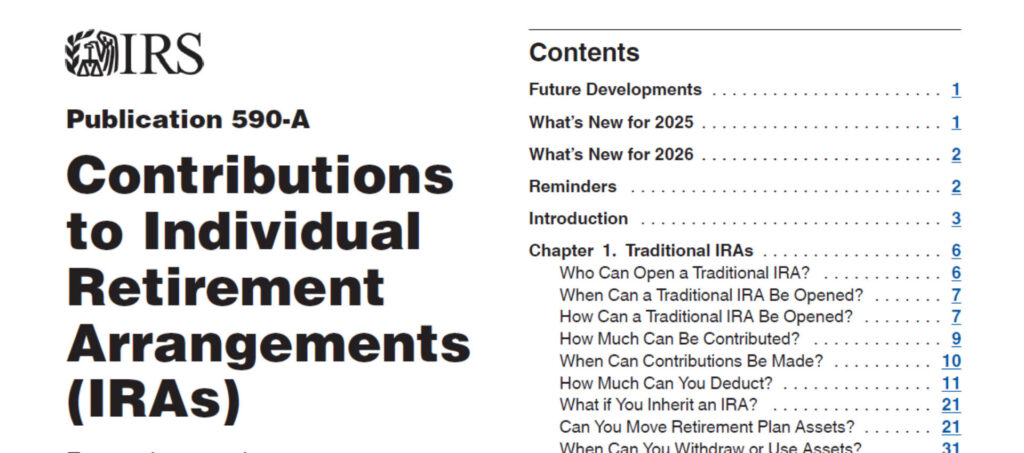
- IRS Publication 590 covers the rules for traditional and Roth IRAs, including what distributions are allowed, how inherited IRAs work, and — critically — which transactions can destroy your IRA’s tax-exempt status entirely.
- A single prohibited transaction can cause your entire IRA to be treated as fully distributed on January 1st of that year, triggering immediate taxes and penalties.
- Disqualified persons include more than just the IRA owner — family members, fiduciaries, and certain business entities are all covered under these rules.
- Some transactions that look like prohibited ones are actually exempt — knowing the difference could save your retirement savings.
- Self-directed IRAs carry a significantly higher risk of accidentally triggering prohibited transaction rules due to the broader range of investment options they allow.
One wrong move inside your IRA can wipe out decades of tax-protected growth in a single day.
Most people open an IRA, contribute regularly, and assume the tax advantages are automatic. They are — until they aren’t. IRS Publication 590 lays out the exact rules that govern your Individual Retirement Arrangement, and buried inside those rules is a set of restrictions so strict that even well-meaning account holders have accidentally triggered them. The consequences aren’t just a fine or a slap on the wrist. They can unravel your entire account.
Understanding these rules isn’t just for tax professionals. If you have an IRA — especially a self-directed one — this is information you need to know before making your next move.
IRS Publication 590 Prohibits More Than You Think
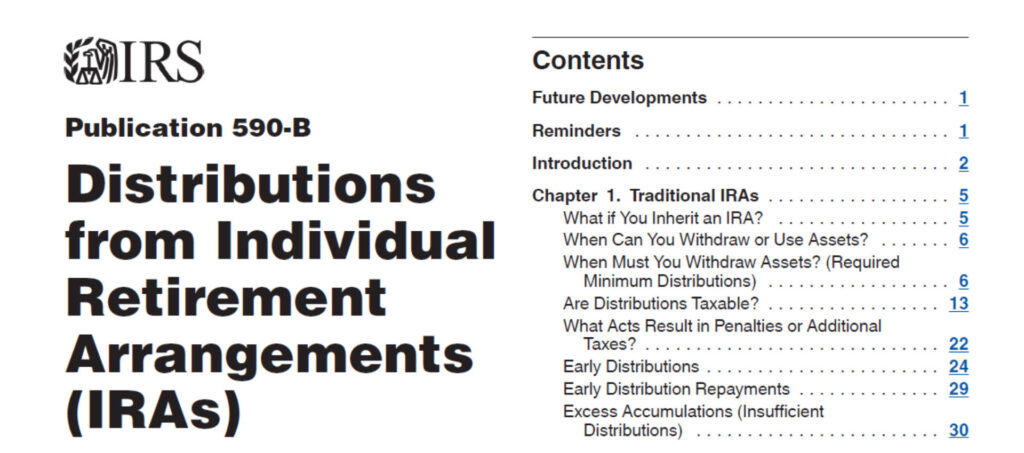
IRS Publication 590 is actually split into two parts: Publication 590-A, which covers contributions to IRAs, and Publication 590-B, which covers distributions. Together, they form the IRS’s complete framework for how IRAs are supposed to work — from the moment you put money in, to the moment you take it out, and every investment decision in between.
Most people focus on contribution limits and withdrawal rules. That’s understandable. But the section that causes the most financial damage — and gets the least attention — is the one dealing with prohibited transactions.
What Counts as a Prohibited Transaction
A prohibited transaction is any improper use of an IRA account or annuity by the IRA owner, a beneficiary, or a disqualified person. The IRS defines this broadly on purpose. It’s not just about obviously illegal moves — it also captures transactions that might seem perfectly reasonable in any other financial context but are forbidden inside an IRA.
Why the IRS Created These Rules
The IRS created these restrictions to prevent people from using the tax advantages of an IRA for personal benefit outside of retirement savings. Without these rules, an IRA could easily become a vehicle for tax-free personal loans, sweetheart real estate deals, or family financial arrangements — all shielded from taxation. The prohibited transaction rules close those loopholes hard.
Who Counts as a Disqualified Person
The term “disqualified person” is central to understanding prohibited transactions. It’s broader than most people expect, and being connected to one — even indirectly — can put your IRA at risk.
Under IRS rules, disqualified persons include the IRA owner themselves, their beneficiaries, and anyone who qualifies as a fiduciary of the account. But the definition extends further than that into family relationships and business structures.
Family Members That Trigger Disqualification
The IRS specifically identifies the following family members as disqualified persons in relation to an IRA owner:
- Spouse
- Ancestors (parents, grandparents)
- Lineal descendants (children, grandchildren)
- Spouses of lineal descendants (sons-in-law, daughters-in-law)
Notably, siblings are not included in this list under IRA rules — though they may still be disqualified in the context of qualified plans. This distinction matters, and it’s easy to get wrong without reading the rules carefully.
What Makes Someone a Fiduciary
An IRA fiduciary is anyone who exercises discretionary authority or control over the management or administration of the IRA, or who provides investment advice for a fee. This can include financial advisors, account custodians, and in some cases, the IRA owner themselves when managing a self-directed account. If a fiduciary engages in a transaction that benefits them personally using plan assets, that’s a prohibited transaction — regardless of whether the IRA owner agreed to it.
Prohibited Transactions in an IRA
The IRS provides specific examples of transactions that are prohibited within an IRA. These aren’t edge cases — they’re the most common ways account holders unknowingly trigger penalties. Each one involves some form of personal benefit being extracted from a tax-advantaged account before retirement.
Borrowing Money From Your IRA
Taking a loan from your IRA is not allowed. This is one of the most frequent mistakes made, particularly by people who confuse IRA rules with 401(k) rules, where loans are sometimes permitted. With an IRA, any borrowing arrangement is classified as a prohibited transaction immediately.
It doesn’t matter how the loan is structured or whether you intend to pay it back with interest. The transaction itself is the violation. The moment money leaves the IRA as a loan to the account owner or any disqualified person, the rules are broken.
- Borrowing money from your IRA — prohibited, regardless of repayment intent
- Selling property to your IRA — prohibited, even at fair market value
- Using the IRA as security for a loan — prohibited, including pledging IRA assets as collateral
- Buying property for personal use with IRA funds — prohibited, whether the use is current or planned for the future
These four categories represent the clearest lines in the sand. Cross any one of them, and the consequences apply to the entire IRA — not just the portion involved in the transaction.
Using Your IRA as Loan Collateral
Pledging your IRA as security for a personal loan is treated the same as a prohibited transaction. The portion of the IRA used as collateral is treated as a distribution in the year it’s pledged, meaning it becomes immediately taxable. If you’re under 59½, the 10% early withdrawal penalty applies on top of that.
This catches people off guard because the IRA funds themselves never actually move — but the IRS still treats the pledged portion as distributed. The account may not lose its IRA status entirely in this case, but the financial hit is real and immediate.
Selling Property to Your IRA
Selling personally owned property — real estate, vehicles, collectibles, or anything else — directly to your IRA is a prohibited transaction. The rule exists because such deals create an obvious conflict of interest. Even if the sale happens at fair market value with a formal appraisal, the IRS doesn’t make exceptions here for IRAs. The ownership relationship between the seller (a disqualified person) and the buyer (the IRA) is what makes it prohibited.
Buying Personal-Use Property With IRA Funds
Using IRA funds to purchase a vacation home you plan to use, a vehicle for personal driving, or any other asset intended for personal benefit — present or future — is prohibited. This rule specifically targets attempts to pre-fund lifestyle assets under the cover of retirement investing. Even if you genuinely plan to use the property only after retirement, the personal-use intent is enough to trigger the prohibition.
Prohibited Transactions in a Qualified Plan
Qualified plans — like 401(k)s, 403(b)s, and pension plans — operate under a similar but slightly expanded framework when it comes to prohibited transactions. The IRS defines four specific categories of conduct that cross the line, and they apply to any disqualified person connected to the plan.
Transfer of Plan Income or Assets to a Disqualified Person
Any direct or indirect transfer of plan assets or income to a disqualified person — or for their use or benefit — is prohibited. This includes moving investments out of the plan into accounts controlled by the owner, a family member, or a business entity in which a disqualified person holds a significant interest.
The key word here is “indirect.” The IRS doesn’t only look at obvious transfers. If a transaction is structured in a way that ultimately benefits a disqualified person — even through a series of steps — it can still be classified as prohibited. Complexity doesn’t create a loophole; it just makes the audit more detailed.
Fiduciary Self-Dealing With Plan Assets
A fiduciary acts in a prohibited manner when they deal with plan income or assets in their own interest. This means a financial advisor, plan administrator, or any other fiduciary cannot direct plan assets toward investments that personally benefit them — even if those investments might also be reasonable choices for the plan. The conflict of interest alone is a violation.
Third-Party Transactions Involving Plan Assets
A fiduciary also cannot receive consideration — meaning payment, compensation, or any form of benefit — from a third party in connection with a transaction involving plan assets. This is the rule that prohibits hidden commissions, kickbacks, or side arrangements where a fiduciary profits from steering the plan toward certain investments or service providers.
If a fund manager receives a fee from an outside party for directing plan contributions into a specific investment product, that’s a prohibited transaction — regardless of whether the investment itself performs well. The compensation arrangement is the problem, not the investment outcome.
What Happens When You Break the Rules
The consequences of a prohibited transaction are among the harshest penalties in the entire tax code. They’re designed to be severe because the IRS wants to make violations genuinely costly — not just an inconvenience to be corrected after the fact.
Your IRA Loses Its Tax-Exempt Status Immediately
If an IRA owner or their beneficiary engages in a prohibited transaction at any point during the tax year, the IRA stops being an IRA as of January 1st of that year — not the date of the transaction. That retroactive effective date is what makes this so damaging. The entire account is treated as if it were distributed on New Year’s Day, regardless of when the actual violation occurred.
This means the full fair market value of the account on January 1st becomes taxable income in that year. A $400,000 IRA triggers a $400,000 taxable distribution — all at once. For most account holders, that pushes them into the highest federal tax bracket for that year, compounding the financial damage significantly.
Tax Consequences of a Disqualified IRA
Once the IRA loses its status, the tax treatment changes entirely. The account’s assets are treated as ordinary income in the year of the deemed distribution. If the account owner is under 59½, the IRS also applies the 10% early distribution penalty on top of the income tax owed.
Beyond the immediate tax hit, the account also loses all future tax-deferred or tax-free growth protection. Any earnings generated after January 1st of that year become subject to regular taxation going forward — the compounding benefit of the IRA structure is gone permanently for those funds.
Additional Penalties for Disqualified Persons
When a disqualified person — other than the IRA owner — participates in a prohibited transaction, additional excise taxes apply. The IRS can impose a tax on the amount involved in the prohibited transaction, and if the transaction isn’t corrected within the allowable timeframe, a second, higher-tier tax kicks in. These penalties are separate from the income tax consequences and stack on top of them.
IRA Collectibles and Unrelated Business Income
Two areas that often get overlooked in discussions about IRA compliance are collectibles and unrelated business income. Both can create unexpected tax exposure — and in the case of collectibles, they can trigger a deemed distribution without the account owner realizing what happened.
What the IRS Classifies as a Collectible
Under IRS rules, an IRA cannot invest in collectibles. If it does, the amount used to purchase the collectible is treated as a distribution in the year of purchase. The IRS defines collectibles to include:
- Artwork
- Rugs and antiques
- Metals (with specific exceptions)
- Gems and jewelry
- Stamps and coins (with specific exceptions)
- Alcoholic beverages
- Any other tangible personal property designated as a collectible by the IRS
The Exception for Certain Coins and Bullion
Not all coins and precious metals are off-limits. The IRS carves out an exception for specific U.S. government-issued coins and bullion that meet established fineness standards. Eligible coins include certain gold, silver, platinum, and palladium coins issued by the U.S. Treasury. Bullion must meet minimum purity requirements — for example, gold bullion must be at least .9950 fine to qualify.
The critical condition is that qualifying bullion must be held in the physical possession of a trustee — meaning a bank or approved non-bank custodian. An IRA owner cannot take personal possession of the bullion, even temporarily, without triggering a distribution. This rule trips up self-directed IRA holders more than almost any other provision in Publication 590.
How Unrelated Business Income Affects Your IRA
If your IRA invests in a business — such as through a partnership or LLC — and that business generates income from an active trade, the IRA may owe Unrelated Business Income Tax (UBIT). This is a tax that applies directly to the IRA, not the account owner personally, and it can erode the tax-advantaged returns you expected from the investment. IRAs investing in operating businesses, certain real estate leveraged with debt, or master limited partnerships, need to evaluate UBIT exposure before committing funds.
Transactions That Are Actually Exempt
Not every transaction between a plan and a disqualified person is automatically prohibited. The IRS recognizes a category of exempt transactions, and understanding them can prevent unnecessary panic when reviewing your IRA activity.
The most important exemption applies to plan participants acting in their capacity as beneficiaries. If you are a disqualified person and receive a benefit to which you are legitimately entitled as a plan participant — such as a standard distribution, a required minimum distribution, or a rollover — that transaction is not considered prohibited. The benefit must be something the plan is actually designed to provide, not a side arrangement.
Other exempt transactions include certain payments of cash, property, or other consideration made by a party dealing with the plan, provided those payments are made to the plan itself rather than to a disqualified person for personal benefit. Additionally, transfers of assets between certain qualified plans under specific IRS-approved conditions can occur without triggering prohibited transaction rules, as long as both the transferor and transferee plans meet the applicable requirements. The bottom line: if the transaction flows toward the retirement account and benefits the plan as a whole, it is far less likely to be classified as prohibited.
How to Keep Your IRA Compliant
Avoiding prohibited transactions isn’t complicated once you understand the structure — but it does require deliberate attention, especially if you hold a self-directed IRA with alternative investments.
Work With a Qualified IRA Custodian
Every IRA must be held by a qualified trustee or custodian — typically a bank, credit union, federally insured savings institution, or an IRS-approved non-bank entity. The custodian plays a critical role in flagging transactions that may violate Publication 590 rules before they’re executed. Choosing a custodian with specific experience in the type of assets you plan to hold is one of the most effective risk-management decisions you can make.
Self-directed IRA custodians, in particular, vary significantly in the level of compliance oversight they provide. Some will process nearly any transaction you request without raising concerns — putting the full burden of compliance on you. Others maintain active review processes that can catch potential violations early. Ask your custodian directly how they handle prohibited transaction screening before opening the account.
Quick Compliance Checklist for IRA Holders:
- ✓ Never borrow from your IRA or use it as loan collateral
- ✓ Do not sell personal property to your IRA, even at fair market value
- ✓ Ensure all IRA investments are managed at arm’s length from disqualified persons
- ✓ Verify that any coins or bullion held in your IRA meet IRS fineness standards and are custodian-held
- ✓ Review investments in operating businesses or leveraged real estate for UBIT exposure
- ✓ Confirm your IRA custodian has experience with the specific asset class you are investing in
- ✓ Consult a tax advisor before executing any non-standard IRA transaction
One practical rule of thumb: if a transaction would benefit you, a family member, or anyone connected to the IRA outside of the normal retirement distribution process, pause and get a professional opinion before proceeding. The cost of a one-hour consultation with a tax advisor is trivial compared to the cost of an inadvertent prohibited transaction.
Know Before You Invest
The most effective protection against prohibited transactions is pre-investment due diligence. Before directing IRA funds into any alternative asset — real estate, private equity, cryptocurrency, precious metals, or a private business — map out every party involved in the transaction and check each one against the IRS definition of a disqualified person. If any disqualified person stands to benefit from the investment, the structure needs to be revised or abandoned entirely. The IRS does not accept “I didn’t know” as a defense, and the penalties are applied regardless of intent.
The Bottom Line on IRS Publication 590 Prohibited Transactions
IRS Publication 590 gives you the full rulebook for IRAs — and the prohibited transaction rules are the most consequential section in it. A single misstep doesn’t just result in a penalty. It can eliminate the tax-exempt status of an entire account retroactively to January 1st of the violation year, triggering a taxable distribution on the full account balance, plus potential early withdrawal penalties, plus excise taxes on the disqualified persons involved. The math on that outcome is devastating for most retirement savers.
The good news is that these rules are knowable, and compliance is entirely achievable with the right information and the right professional support. Work with a qualified custodian, vet every non-standard transaction before it happens, and treat your IRA as what it is: a retirement vehicle with specific legal boundaries — not a personal financial toolkit. The tax advantages are extraordinary, but they come with conditions, and those conditions are non-negotiable.
Frequently Asked Questions
Below are the most common questions people have about IRS Publication 590 and prohibited transactions, answered clearly and directly.
Can I personally use property owned by my IRA?
No. Using property owned by your IRA for personal purposes — whether it is real estate, a vehicle, or any other asset — is a prohibited transaction under IRS Publication 590. It does not matter whether the use is occasional, whether you pay rent to the IRA, or whether you intend to stop using the property before taking distributions. The personal use itself is the violation, and it triggers the consequences that apply to all prohibited transactions, including potential loss of the IRA’s tax-exempt status.
What is the tax penalty for a prohibited transaction in an IRA?
If an IRA owner engages in a prohibited transaction, the IRA loses its tax-exempt status as of January 1st of the year the transaction occurred. The entire fair market value of the account on that date is treated as a taxable distribution, subject to ordinary income tax rates. If the account owner is under age 59½, an additional 10% early distribution penalty applies to the full amount. For disqualified persons other than the account owner who participate in the transaction, additional excise taxes can be assessed separately on top of those income tax consequences.
Does lending money from my IRA to a family member count as a prohibited transaction?
Yes — if that family member is a disqualified person. Since the IRS defines disqualified persons to include spouses, ancestors, lineal descendants, and spouses of lineal descendants, lending IRA funds to a child, grandchild, parent, or a child’s spouse would be a prohibited transaction.
However, siblings fall outside the IRS definition of disqualified persons under IRA rules specifically. That said, this does not necessarily mean lending to a sibling is straightforward or advisable — the structure of the arrangement and whether any fiduciary relationship exists still matters, and the IRS could look at the transaction more broadly depending on the circumstances.
The safest approach is to treat IRA funds as entirely separate from any personal or family financial arrangements. The tax advantages of the account are too valuable to risk on a personal loan, regardless of who the borrower is.
Can a prohibited transaction be reversed to save my IRA’s tax status?
Generally, no. Once a prohibited transaction occurs, the IRS treats the IRA as having lost its tax-exempt status on January 1st of that year. There is no formal correction program for IRAs comparable to the IRS Employee Plans Compliance Resolution System (EPCRS) that exists for qualified plans. Certain prohibited transactions in qualified plans can be corrected within a specific timeframe to avoid escalating penalties, but for individual IRAs, the loss of status is typically permanent for that account. This is precisely why prevention — through proper due diligence before a transaction — is the only reliable strategy.
Are self-directed IRAs more at risk for prohibited transactions?
Yes, significantly. A standard IRA held at a major brokerage or bank is generally limited to publicly traded assets like stocks, bonds, and mutual funds — investments that rarely create the kind of conflicts of interest targeted by prohibited transaction rules. A self-directed IRA, by contrast, can hold real estate, private businesses, precious metals, promissory notes, and a wide range of alternative assets, each of which creates more opportunities for a disqualified person to become involved in the transaction.
The structural flexibility of a self-directed IRA is its greatest strength and its greatest risk. Because the account owner has direct control over investment decisions, the responsibility for compliance falls almost entirely on them. Custodians of self-directed IRAs typically do not provide investment advice or flag prohibited transaction risks proactively — they process what they are instructed to process.
Real estate deals within self-directed IRAs are a particularly high-risk area. If the IRA owns a rental property, the account owner cannot perform repairs themselves, cannot use the property personally, and cannot have any disqualified person receive payment for services related to the property. Every interaction between the property and anyone in the disqualified person category must be conducted at arm’s length and through independent third parties.
If you hold or are considering a self-directed IRA, working with a tax attorney or CPA who specializes in retirement accounts is not optional — it is essential. The complexity of the rules and the severity of the penalties make professional guidance the most cost-effective investment you can make for that account’s long-term protection.